Tomorrow, February 1, Holy Cross Church Episcopal will welcome our Bishop, The Rt. Rev. C. Franklin Brookhart. His presence among us signifies the unity of the Church, but for Holy Cross his presence is even more special than that.
Bishop Brookhart is the Pastor of Holy Cross, and I am his Vicar. That is, since the Bishop cannot be present at every worship service, he selects a priest to stand in for him vicariously. That would be me.
Tomorrow Bishop Brookhart will confirm a previously-baptized person and also receive another person into the Episcopal Church from the Roman Catholic tradition. Only a Bishop is authorized to do these two things. If there were a baptismal candidate, the Bishop would baptize that person, although I am authorized to do so in the Bishop's absence.
If you have never attended an Episcopal worship service presided over by a Bishop, you are in for a treat. Please come and join us for joyful worship.
In peace,
Linda+
The Rev. Linda McCloud
Vicar, Holy Cross Church Episcopal
Billings, Montana
406-208-7314
http://www.holycrosschurchbillings.org/
Saturday, January 31, 2009

Wednesday, January 28, 2009
Stopping to pray

Today I suggest a couple of prayers for your consideration and meditation:
For Cities
Heavenly Father, in your Word you have given us a vision of that holy City to which the nations of the world bring their glory: Behold and visit, we pray, the cities of the earth. Renew the ties of mutual regard which form our civic life. Send us honest and able leaders. Enable us to eliminate poverty, prejudice, and oppression, that peace may prevail with righteousness, and justice with order, and that men and women from different cultures and with differing talents may find with one another the fulfillment of their humanity; through Jesus Christ our Lord. Amen.
For Towns and Rural areas
Lord Christ, when you came among us, you proclaimed the kingdom of God in villages, towns, and lonely places; Grant that your presence and power may be known throughout this land. Have mercy upon all who live and work in rural areas; and grant that all the people of our nation may give thanks to you for food and drink and all other bodily necessities of life, respect those who labor to produce them, and honor the land and the water from which these good things come. All this we ask in your holy Name. Amen.
From The Book of Common Prayer, page 825.
In peace,
Linda+
The Rev. Linda McCloud
Vicar, Holy Cross Church Episcopal
Billings, Montana
406-208-7314
www.holycrosschurchbillings.org
photo: stop sign in Billings
Monday, January 26, 2009
Conversion of Saint Paul the Apostle
 Today we celebrate the conversion of Saint Paul the Apostle. Paul, formerly known as Saul of Tarsus, was a self-appointed enemy of Christians soon after the death and resurrection of Jesus. According to the Acts of the Apostles, Paul was present at and consenting to the execution of Stephen, the Christian martyr. Paul was guarding the coats of those who were stoning Stephen to death.
The Ninth chapter of Acts goes on with this story:
Saul, still breathing threats and murder against the disciples of the Lord, went to the high priest and asked him for letters to the synaogues at Damascus, so that if he found any who belonged to the Way, men or women, he might bring them bound to Jerusalem.
You probably know how this part of the story goes: At about mid-day Jesus appeared to Paul in a flash of light and Paul fell off his horse right there on the Damascus Road. Paul had the original "Damascus Road experience." That was the beginning of a new life for Paul as he became a Christian on the spot. He was baptized in Damascus and then, before becoming a missionary, Paul went off on a lengthy retreat to listen for the voice of God.
Paul's life was never the same, once he heard Jesus call his name.
In peace,
Linda+
The Rev. Linda McCloud
Vicar, Holy Cross Church Episcopal
Billings, Montana
http://www.holycrosschurchbillings.org/
406-208-7314
Sunday, January 25, 2009
sermon for January 25, 2009

Mark 1:14-20
Jesus goes fishing
Our Gospel lesson is the wonderful passage about Jesus calling four disciples. Jesus’ call to them would change their lives forever. I just have to quote the first verse of Hymn No. 661, and then we can move on from here:
They cast their nets in Galilee
just off the hills of brown;
such happy, simple fisher-folk,
before the Lord came down.
I want to point out a few things about these people whom Jesus called. First of all, they were neighbors in the Galilee. Maybe they had been competitors or even partners in the fishing business. But it’s a pretty sure thing that they knew each other. Fisher people know other fisher people. I cannot think of any one of us who lives in a vacuum. We all have neighbors, friends, or relatives. We all know someone who would benefit from seeking God, or a deeper knowledge of God.
Secondly, these people might have seen Jesus before. But maybe they had not seen him up close. Maybe they had not heard Jesus call their name. Maybe they had not been invited to follow him. Jesus gives them (and us) a personal invitation. Perhaps someone you know is waiting for a personal invitation to come and worship with us at Holy Cross. Please invite them. This will improve your people-fishing skills.
Thirdly, these invitations to follow Jesus happened in the course of daily living. The scripture text makes it sound casual, as though Jesus was simply going for a walk along the shore of the lake. Later, he would walk on the lake itself and his disciples would believe in him more than ever. As we go about our daily business, let’s think in terms of inviting others to join us in joyful worship on Sunday mornings, or for those lively discussions on Thursday evenings. We don’t have to walk on water to do that.
At first glance we might think that Jesus looks all alone out there on the shore of the Sea of Galilee. Actually, Jesus had gone fishing without a boat or a net. He was fishing for followers.
Jesus had picked Galilee very carefully. He did not begin his ministry in Jerusalem, which was the hub and center of religious activity in his day. He would later spend more time in Jerusalem, but the beginning of his ministry was out in the countryside. He would work his way back to Jerusalem and be killed there by the authorities. He would be buried there and rise again. But after his resurrection, Jesus would return to the Galilee. He loved that place.
Jesus went out to the countryside where the air is clear and preached a simple but profound message. He told his hearers that it was time to break out of their mold and live the dynamic life of the Kingdom of God. They could break free and believe that God was present with them. They were to repent – turn completely around – and follow Jesus. He would teach them how to live this new life. He would give to them unforgettable stories and parables about how to love God and love their neighbors. He would teach them how to fish for people.
Jesus was not alone for very long. He began by calling two sets of brothers. Jesus knew that he could not do all the people-fishing by himself. From a practical standpoint, Jesus had to have help. Jesus needed other hands to work with him and other feet to walk with him.
Jesus’ call to Simon and Andrew was simple: literally, “Come after me and I will make you to become fishers of people.” This was a permanent, ongoing invitation. If they followed Jesus, they had to decide whether they would allow Jesus to make them to become something they had not been before. This was risky business. Would they become Jesus’ disciples and learn his ways? Would they follow Jesus’ teachings? But beyond that, would they pass Jesus’ teachings along to others? Would their enthusiasm for the love of Jesus be contagious? What would happen if they allowed Jesus to make them to become fishers of people?
James and John were the two other brothers who answered readily the call of Jesus. Jesus also trained them to be and make disciples. Jesus would invest about three years in these first, carefully chosen people who would turn their world upside down.
I’ve been fishing only a few times, and I think fishing is not as easy as it appears to be. Serious fishing takes a lot of patience and ingenuity. It also takes being in the right place at the right time. It takes the right bait. The people I know who like to fish seem to have fishing in their blood. Some of them have bumper stickers that say, “I’d rather be fishing.” I suspect that fishing can be habit-forming. Once you catch a fish, you would want to catch more. At least, that seemed to be Jesus’ attitude toward fishing.
I think that God still fishes for people. I believe God uses many lures and baits to do that. I think that one of the things God uses is beautiful, well-kept churches, Christian art and music. I like to think our web site is helpful, because people can check us out online. They can read sermons, newsletters, and vital information about us and our connections to other like churches. And we have a big sign at our future location.
As your priest, I’m continuously fishing for people. I try to be very visible. My purpose for doing that is to meet people who want to seek God or a deeper knowledge of God. I believe they can explore their faith and seek God here at Holy Cross. But like our Lord Jesus, I cannot do it alone.
Jesus did not start a secret society. Jesus started a church which he loves and for which he gave himself over to suffering and death. I believe the major reason why people come back to church again and again is that somehow they sense the mystery and the presence of God. This fills an empty place – that “God-shaped vacuum” in our hearts. Once we have experienced that, we’re hooked. And once we are hooked on Jesus, our lives are forever changed. The Holy Spirit of God reels us in.
Yes, our Lord Jesus is still fishing for disciples. I hope we can all join him in this exciting adventure. Amen.
In peace,
Linda+
The Rev. Linda McCloud
Vicar, Holy Cross Church Episcopal
Billings, Montana
406-208-7314
www.holycrosschurchbillings.org
photo: pier at Wrangell, Alaska
June 2008
Friday, January 23, 2009
O little town of Bethlehem
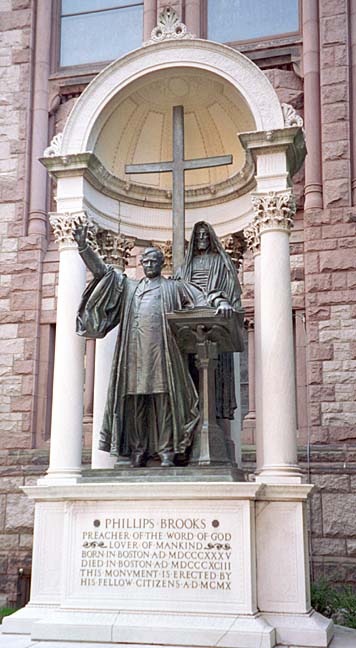 When I think about Bethlehem, Israel, several images come to mind. One is the stable where Jesus was born, which has long since been claimed by the Church of the Nativity. Another image is the thirty-foot wall that separates the West Bank of Palestinian territory from the rest of Jerusalem. I think of the checkpoint staffed with Israeli soldiers, the refugee camp started by the United Nations in 1949, and the isolation that the residents feel.
But also when I think of Bethlehem, I think of Phillips Brooks, an Episcopal priest, who was known as the "greatest preacher of the Nineteenth Century." His friends called him "a leader of youth, with a spirit of adventure, in thought, life and faith." This reputation followed him throughout life, as in 1891 he was elected Bishop of Massachusetts.
Why do I think of Phillips Brooks in connection with Bethlehem? Check it out. He penned these words:
O little town of Bethlehem,
how still we see thee lie!
Above thy deep and dreamless sleep
the silent stars go by;
yet in thy dark streets shineth
the everlasting light;
the hopes and fears of all the years
are met in thee tonight.
How silently, how silently,
the wondrous gift is given!
So God imparts to human hearts
the blessings of his heaven.
No ear may hear his coming,
but in this world of sin,
where meek souls will receive him,
still the dear Christ enters in.
Here's another quote from Phillips Brooks: "Whatever happens, always remember the mysterious richness of human nature and the nearness of God to each one of us."
There's more, but that's enough for today.
In peace,
Linda+
The Rev. Linda McCloud
Vicar, Holy Cross Church Episcopal
Billings, Montana
406-208-7314
http://www.holycrosschurchbillings.org/
artwork: statue of Phillips Brooks and Jesus
http://www.dailyencouragement.net/images/people/phillips_brooks_statue.jpg
Thursday, January 22, 2009
Thursdays at 6:30

On Thursday evenings at 6:30, Holy Cross Church Episcopal and friends gather for a time of fellowship and learning. We invite all who would like to participate. So far, we have learned to pray Morning Prayer and Evening Prayer using The Book of Common Prayer as a guide.
This evening we will compare the Prayer Book and matching Hymnal 1982 and answer such questions as: "Why do Episcopalians always sing hymns no one knows?" We will conclude by praying Compline (night prayers) after about an hour's discussion.
So, please get directions to the church on our website www.holycrosschurchbillings.org and come over to join us for lively conversation and singing. It's good for your heart.
In peace,
Linda+
The Rev. Linda McCloud
Vicar, Holy Cross Church Episcopal
Billings, Montana
406-208-7314
www.holycrosschurchbillings.org
artwork: http://i39.piczo.com/view/1/5/q/p/s/d/x/c/m/h/t/5/img/i112037322_10191.jpg?redirsrc=img
Wednesday, January 21, 2009
Child saints

In addition to Mary the mother of Jesus, who was probably a young teenager when she said "Yes" to God and gave birth to the Savior of the world, there are other young saints to be remembered.
Today is the feast day of Agnes of Rome, martyr A.D. 304. Here is a blip of history about her, gleaned from Lesser Feasts and Fasts, pages 134-135:
Agnes was twelve years old when she suffered death for her faith, in Rome, during the persecution brought on by the Emperor Diocletian. After withstanding threats and tortures by her executioner, Agnes remained firm in refusal to offer worship to the heathen gods, and was burned at the stake, or, according to another early tradition, was beheaded with the sword. The early Fathers of the Church praised her courage and chastity, and remarked upon her name, which means "pure" in Greek and "lamb" in Latin.
Pilgrims still visit Agnes' tomb and the catacomb surrounding it, beneath the basilica of her name on the Via Nomentana in Rome that Pope Honorius the First (625-638) built in her honor to replace an older shrine erected by the Emperor Constantine.
On her feast day at the basilica, two lambs are blessed, whose wool is woven into a scarf called the pallium, with which the Pope invests archbishops. Pope Gregory the Great sent such a pallium in 601 to Augustine, the first Archbishop of Canterbury. A representation of the pall appears on the coat of arms of Archbishops of Canterbury to this day.
I have heard that the finished pallium is laid on the tomb of St. Peter overnight before being sent on to its destination.
Almighty and everlasting God, you choose those whom the world deems powerless to put the powerful to shame: Grant us so to cherish the memory of your youthful martyr Agnes, that we may share her pure and steadfast faith in you; through Jesus Christ our Lord, who lives and reigns with you and the Holy Spirit, one God, for ever and ever. Amen.
In peace,
Linda+
The Rev. Linda McCloud
Vicar, Holy Cross Church Episcopal
Billings, MT
406-208-7314
artwork: http://members.chello.nl/~l.de.bondt/AgnesofRome.jpg
Subscribe to:
Posts (Atom)
